Are You Measuring Your Family Unit Satisfaction Score?
Your revenue numbers look fine, throughput is solid and the queue at the arcade never really stops. Average spend per head is tracking where it should be.
So why does it feel like guests are not coming back as often as they should?
Here is a question most FEC operators have never been asked: when a family leaves your venue, how many of them had a good time individually, and how many of them had a good time together?
Those are not the same question. And the gap between them is where return visits are won or lost.
Are you Tracking this Metric in Your FEC?
Most family entertainment centers measure performance the same way:
- Revenue per square foot.
- Plays per hour.
- Average transaction value.
- Redemption rates.
These are all valid numbers. They tell you how efficiently your floor is converting traffic into revenue.
What they do not tell you is whether the family that just walked out is coming back.
The reason is simple: none of those metrics capture the experience of the group. They capture the experience of individuals who happened to visit at the same time. A family of four generates four individual data points. But they made one decision to come, and they will make one decision about whether to return.
Tip:
That decision is not made by the highest-satisfaction member of the group. It is made by the group as a whole, negotiated informally in the car on the way home, shaped by whoever had the most friction, whoever got bored fastest, whoever spent 20 minutes watching instead of playing.
Call it the Family Unit Satisfaction Score. It is not a formal industry metric (at least not yet), but the operators who are outperforming their markets are the ones who have started thinking in these terms, even if they have not given it a name.
Why Individual Metrics Miss the Group Decision
Think about how a return visit actually gets decided.
It is rarely one person’s call. A parent does not unilaterally book a second trip to a venue, and a group of friends does not return because one of them had a great time while the others were waiting around.
The decision to come back is a group decision, and it is driven by the group’s collective memory of the last visit.
Research from Columbia Business School, identifies what makes experiences feel special and memorable. One of the most consistent findings is the role of relational meaningfulness: the social presence of family or close friends deepens an experience’s impact more than almost any other factor.
The memory is not just about what happened. It is about who was there, and whether they were in it together.
This is why your per-player revenue numbers can look healthy while your repeat visitation rate quietly underperforms. Individual guests are having fine experiences. But fine individual experiences do not produce the relational meaningfulness that drives the decision to come back.
Tip:
The family that leaves your venue without a shared peak moment does not become a returning family. They become a one-visit transaction.
What Low Family Unit Satisfaction Actually Looks Like
It rarely looks like a complaint. That is what makes it hard to catch.
A family with low unit satisfaction does not usually fill out a negative review. Nobody had a terrible time, the staff was friendly, the venue was clean, the kids played some games, mom eventually found something to do and dad checked his phone more than he expected to.
They leave neutral. And neutral, in the FEC business, is the slow leak you do not see until the numbers have already moved.
The signals are subtle. A shorter dwell time than your floor should produce, low food and beverage attachment from certain visitor profiles, groups that complete one lap of your floor and leave rather than looping back, and families who book birthday parties once and choose somewhere else the following year.
None of these individually point to the family unit satisfaction problem. Together, they describe a floor that is good at entertaining individuals and not yet optimised for entertaining groups.
What a High Family Unit Satisfaction Score Requires
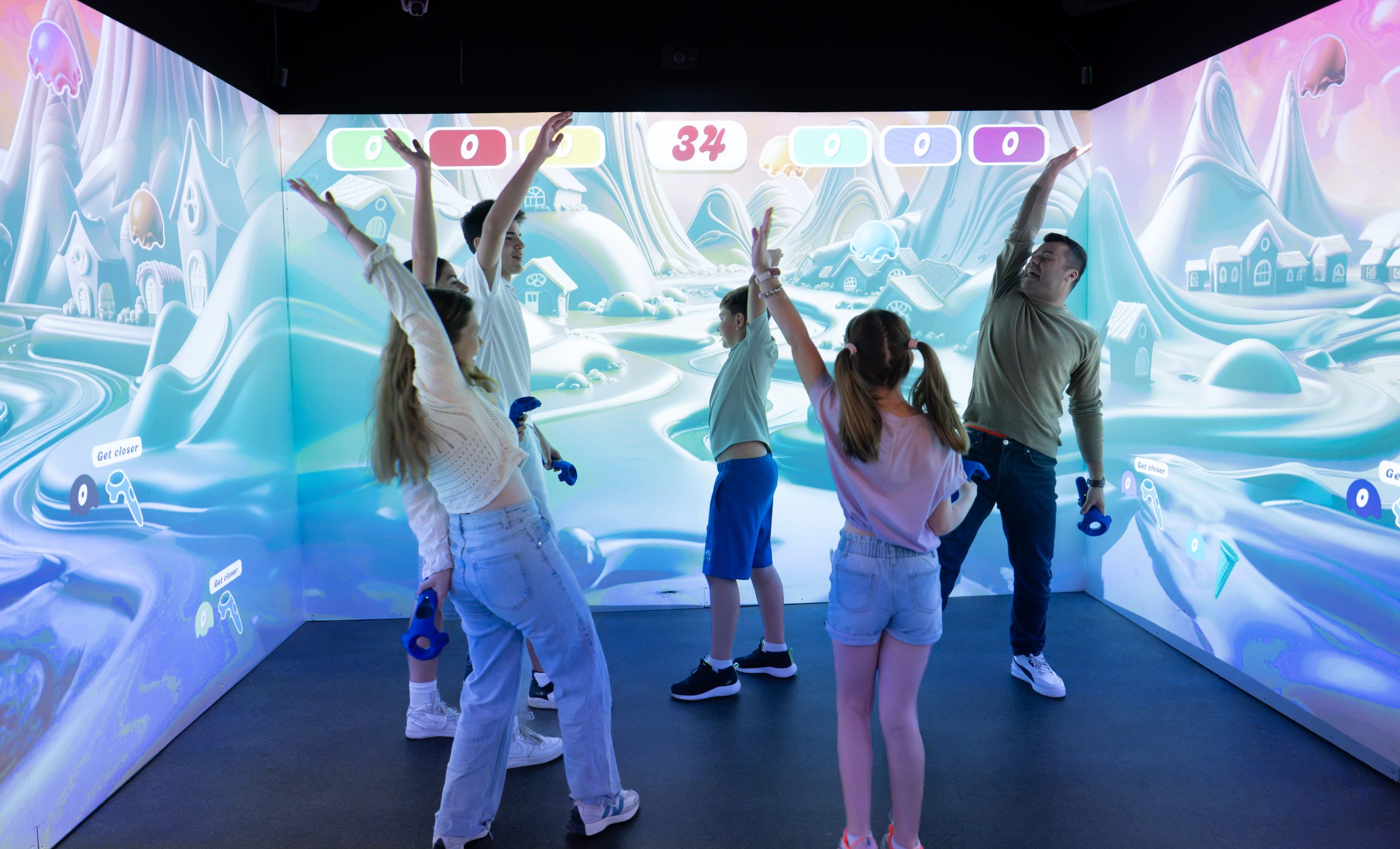
It requires one thing above everything else: at least one moment where every member of the group is inside the experience at the same time.
Not taking turns, not watching from outside, and not on separate headsets in the same room. They are actually together, reacting to the same thing, at the same moment.
That shared peak moment is what drives the group memory.
It is what gets talked about on the drive home. It is what the 10-year-old describes to their friends at school on Monday. It is what makes the parent think “we should do that again” rather than “that was fine.”
Most FEC floors have plenty of individual attractions. They have fewer, sometimes none, that are designed to put the whole family inside the experience simultaneously.
That gap is the family unit satisfaction problem made physical. It is visible in your floor layout if you look for it.
Tip:
The question to ask is not “how many attractions do we have?” It is “how many of our attractions can a family of four or five experience together, at the same time, with no one waiting outside?”
For most venues, the honest answer to that question is the beginning of a more useful conversation about what belongs on the floor.
Starting to Measure What Actually Drives Return Visits
You do not need a new software platform to start thinking about FEC guest satisfaction at the group level. You need different questions.
When you review your dwell time data, look at it by group size rather than per head. Are families of four staying as long as your floor should support? Or are they leaving earlier than solo visitors and couples?
When you collect feedback, ask the group, not just the individual.
A post-visit survey that asks “did you have a good time?” captures individual sentiment. One that asks “did your whole group have a good time?” starts to surface the gap.
When you evaluate a new attraction, add one question to your checklist: can every member of the family who walks in play this at the same time? If the answer is no, you are adding to your individual offering. If the answer is yes, you are building toward a higher family unit satisfaction score.
The venues that win on repeat visitation are not always the ones with the most attractions. They are the ones where families leave having shared something, not just having done things near each other.
That distinction is measurable. It shows up in return visit rates, in word-of-mouth referrals, in the groups that rebook rather than explore somewhere new next time.
What the Right Attraction Actually Has to Do
Most group attractions are social. That is not the same as shared.
Laser tag, bowling, arcade walls: your guests love them.
They do them together, side by side. But each person is still in their own experience. Their own turn, their own score, their own moment, the group is present. It is not participating as a unit.
The distinction sounds subtle; the revenue impact is not.
An attraction that is genuinely shared puts every member of the group inside the same moment simultaneously.
The reaction, the chaos, the competitive banter, the near-miss, all landing at the same time for everyone in the room. That is the moment that becomes the group memory. That is the moment that drives the return visit.
There is a second thing the right attraction has to do, and operators underestimate it: it has to be accessible to the whole group.
Not just age-appropriate, but genuinely open: no prior gaming skills required, no gate that quietly filters out the parent who is not a gamer, the grandparent who hesitates, the younger sibling who is not sure.
Most venues are family-friendly, and few are family-inclusive: QBIX Play
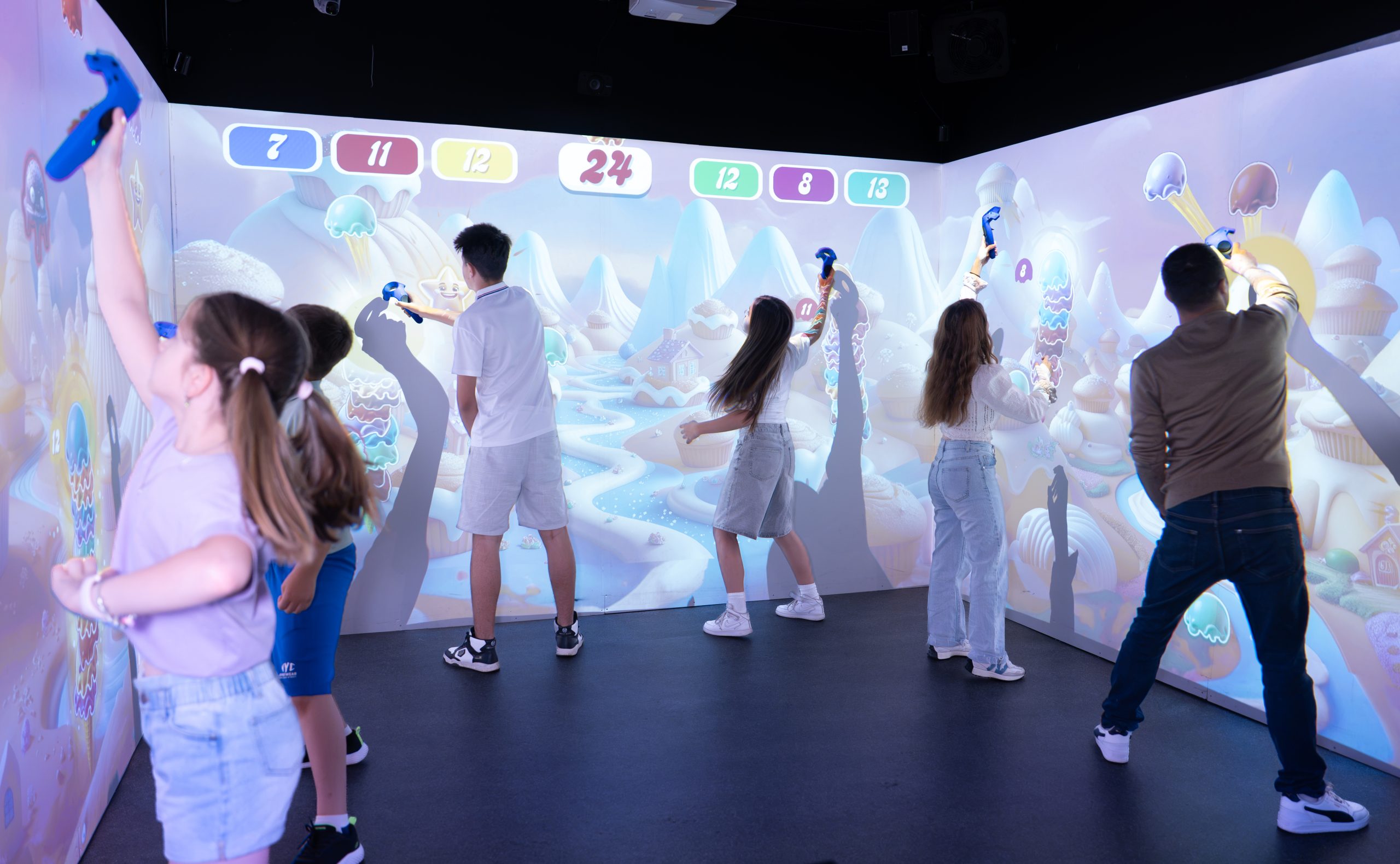
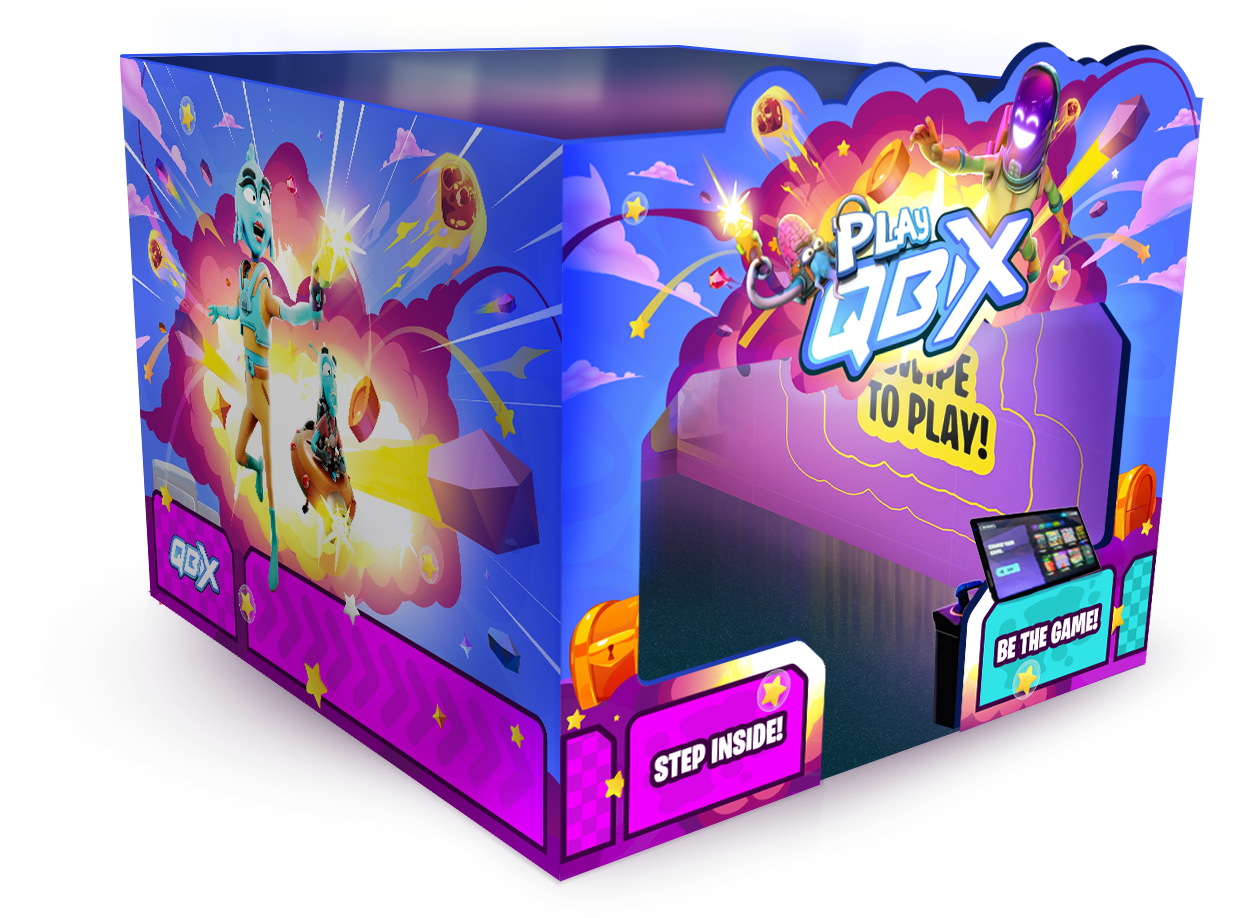
We built QBIX Play around these elements: 6 simultaneous players inside enclosed projected walls, not in front of a screen but physically inside the experience. A multi-mechanic controller that requires no prior skill, so the whole family enters and plays together regardless of age or gaming confidence.
No staff required, no change to how you price or sell: it layers into your existing operation without creating new ones.
If you are thinking about family unit satisfaction, the question is not which attraction looks best, but which one puts the whole group inside the same moment, every visit, without anyone waiting outside.
That is the floor decision that can change your return visit numbers.


Subscribe to us